Introduction
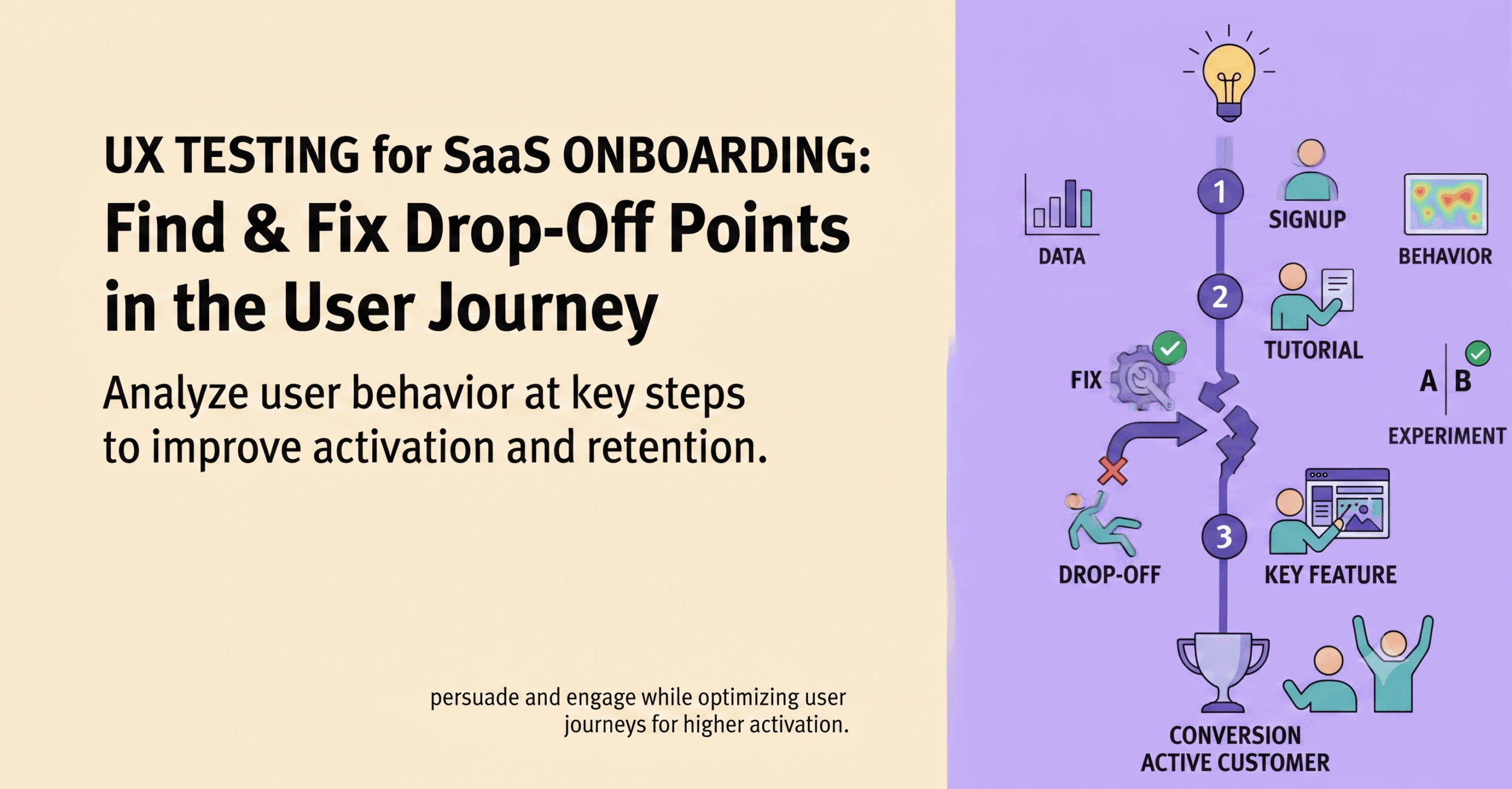
A great SaaS product can have advanced features, but if users experience difficulties during onboarding, they might never find its real value. The user experience of SaaS onboarding plays an important role in converting new signups into active customers by allowing a seamless transition from first interaction to product consumption.
Businesses nowadays want data-driven experiences that are centered around user behavior, usability, and continuous development in order to keep up with the growing needs of their users and the fierce competition in the market.
When users have a positive onboarding experience, they learn how to utilize the product effectively and are able to accomplish their goals with little to no effort. Software as a service (SaaS) businesses can improve adoption, decrease churn, and build closer relationships with customers by studying user behavior, finding pain points, and testing improvements continuously.
What is UX Testing for SaaS?
For SaaS, UX testing means analyzing how actual users use your product to figure out what works and what doesn’t. It is not about whether they like it or not. You want to see if users can find features, finish tasks well, and gain value quickly enough to stay.
It’s different from general usability testing because SaaS has unique challenges. Users should familiarize themselves with your product during the trial period, regularly utilize its features, and renew their subscriptions. Then it’s only converted to revenue.
Additionally, user research and SaaS user testing are different tasks. Research identifies the requirements of users. While Testing validates if your current design delivers it. Both are important, but testing can tell you exactly what’s wrong at this very moment.
Your product is always evolving, which is why SaaS requires continuous testing. Updates are released. Flows are modified. Changes have an effect on how users act. Companies that test once and stop end up with products that worked six months ago but confuse users today.
What is SaaS Onboarding?
The term “SaaS onboarding” refers to the steps taken to ensure that new users are well-informed and able to utilize a software product effectively on their own, beginning from the time they sign up for it. By simplifying the process, making it easier to understand, and minimizing difficulties, a well-designed onboarding experience shortens the time it takes for users to have their moment and fully embrace the product. Companies should integrate user experience research, testing methodologies, and a systematic design approach to create an efficient SaaS onboarding experience.
Key UX Testing Methods for SaaS Teams
1. Usability Testing (Moderated/Unmoderated)
Moderated testing is when you watch users in real time and ask them questions. Unmoderated means that people will perform tasks on their own and be recorded. They both work for the SaaS product user testing. Use the moderated one to figure out why people are having trouble. Use the unmoderated when you require data from a larger number of people quickly. Most SaaS teams need both of these.
2. A/B Testing
A/B testing involves testing two versions to find out which one works better. Which version gets more signups, A or B? Which onboarding flow results in better activation? That works well if you have enough traffic and you have a clear idea. It tells you what works, but mainly why.
3. First-Click Testing
First click tests reveal where users know to click to start a task. 5-second tests tell you if consumers get what they’re looking at in five seconds. They are fast and catch obvious errors. If they can’t find what to click in 5 seconds, your UI is broken.
4. Heatmaps & Session Recordings
Session recordings show exactly what users do. You watch them move, see where they stop, and catch moments of confusion. Heatmaps show general behavior as where everyone clicks, scrolls, and ignores. These tools will identify flaws you wouldn’t think to test for. Is the user engaging in an unusual activity? You will know.
5. Card Sorting and IA Tests
Card sorting helps you correctly organize features. Users classify things in a way that makes sense to them. IA (Information Architecture) checks to ensure your navigation structure is working. Use these when you are updating menus or adding plenty of new functionality.
6. Accessibility Testing
Accessibility is no longer optional. It’s how you make your product available to everyone. Test with screen readers, keyboard navigation, and color contrast tools. Many SaaS companies miss this, losing consumers who need an accessible design.
How to Improve SaaS Onboarding UX: A Complete Guide
Whether a user keeps using a SaaS product or decides to uninstall it is frequently decided by their initial experience with the product. SaaS onboarding acts as a bridge between initial signup and meaningful product usage, ensuring users understand workflows, explore key features, and achieve their desired outcomes. To enhance activation and retention, a strategic onboarding approach integrates user data, experience design, and continual tuning.
To enhance the user experience of SaaS onboarding and provide a more engaging and seamless experience for users, the following are some effective steps:
1. Understand User Needs and Expectations
Identifying the target audience, learning their needs and goals, and recognizing any problems they might encounter are the key elements of an effective SaaS onboarding process. By seeing how actual users engage with the site, teams may find usability problems and places where users could get stuck.
This is in addition to the fact that analyzing website findability helps in figuring out whether key features, AI tools, and information are easily accessible to users. Users are less likely to stick around and get the benefits of a product if they have to dig around to locate what they’re looking for.
2. Create An Easy and Frictionless First Impression
User onboarding starts even before they dive headfirst into the product. An increase in drop-offs and needless barriers can result from an overly complex registration process or unclear initial interaction.
The goals of an effective onboarding process are to improve the process, make the product’s value strong, and guide users to their first successful action. In such scenarios, prototype testing allows companies to confirm onboarding concepts, assess user reactions, and optimize the experience before development. Strong early visual identity also plays a role, as logo design helps reinforce trust and makes the first interaction feel more credible and cohesive with the product experience.
This connection between product clarity and visual branding ensures users immediately recognize value and consistency from the very first touchpoint.
3. Make It Easy to Navigate the Product
There are often a lot of features, processes, and dashboards on SaaS platforms, which can be confusing for new users if the information is not well presented. It is important to have good information architecture so that the site’s features, content, and navigation are all set up in a transparent and understandable way.
Users benefit from an organized layout because it shows them the big picture, tells them what to do next, and explains how everything fits together. For example, instead of introducing every feature at once, a CRM platform can walk users through key tasks such as adding contacts, creating offers, and managing customer interactions.
4. Help Users Reach Value Faster
Users should be able to quickly see the product’s value as part of an effective onboarding process. The goal of onboarding should not be to describe every feature but rather to direct users toward actions that will yield the greatest return in the short term.
Nowadays, an increasing number of modern SaaS systems are incorporating AI agents into their onboarding processes through advanced AI agent development services to better assist users with individualized guidance, inquiries, recommendations, and personalized support. For instance, an AI agent can offer real-time support depending on the user’s behavior, propose useful features, or aid with workflow setup.
5. Ensure a Consistent Experience Across Devices
The onboarding process should also include mobile testing because many SaaS consumers access products from numerous devices. A desktop-optimized approach might not translate well to mobile devices. You can find navigational, accessibility, performance, and usability concerns using mobile testing. Making sure the onboarding process is consistent across devices makes it easy for users to engage with the product from any location or device.
6. Assess and Improve the Onboarding Process
Continuous monitoring and analysis are essential for improving SaaS onboarding. Using indicators like usability, conversion rates, and activation rates, benchmarking lets businesses assess how well their onboarding processes are working. Just as SEO services rely on data-driven optimization, teams should analyze how users progress through onboarding to identify areas for improvement and determine whether design changes are delivering meaningful results.
7. Make Continuous Improvements Based on User Behavior
Since user expectations, product features, and market needs are always changing, SaaS onboarding is a process that needs to be improved continuously. Businesses should routinely track customer actions, collect comments, and look for potential issues along the way.
Teams may increase usability and engagement by using data insights and product analytics to determine where users face friction and make improvements there. Users are more likely to feel comfortable with the product, find its features quickly, and finish important tasks when the onboarding experience is regularly updated.
Introducing users to a platform is just the beginning of an effective SaaS onboarding approach. It creates long-term customer connections, increases product utilization, and simplifies the digital experience for consumers, allowing them to accomplish their goals more quickly.
Conclusion
A well-executed SaaS onboarding process aims to introduce users to the product, highlight its benefits, and ease its integration into existing processes. Businesses can improve engagement, build better relationships, and promote long-term adoption by designing a journey that is clear, simple, and user-focused. A smooth first experience is often the key to long-term success, with users converted to trusted customers.

- UX Testing for SaaS Onboarding: Finding Drop-Off Points Before Users Churn - August 4, 2026
- How AI Agents Are Reshaping the Future of UX Research - June 16, 2026
- AI-Driven Usability Testing: Faster Insights Without the Manual Effort - May 25, 2026
 Give feedback about this article
Were sorry to hear about that, give us a chance to improve.
Error: Contact form not found.