Never have I ever:
Released a product and failed to meet user expectations.
I have.
Let’s face it, you too have, we all have
Today, launching software development products without considering user expectations can be an expensive affair.
But what if you could reverse this?
How about you could reduce the risk by real-time testing of your products, with active users at every phase of the development process?
Introducing real-time user testing – a revolutionary way companies design, iterate, and release software products.
But does this process impact development speed and quality? If yes, how?
Come, let’s discover how user testing impacts product speed, helps teams make informed decisions, and builds products that meet user needs.
Why Real-Time User Testing is Essential for Product Development Speed?
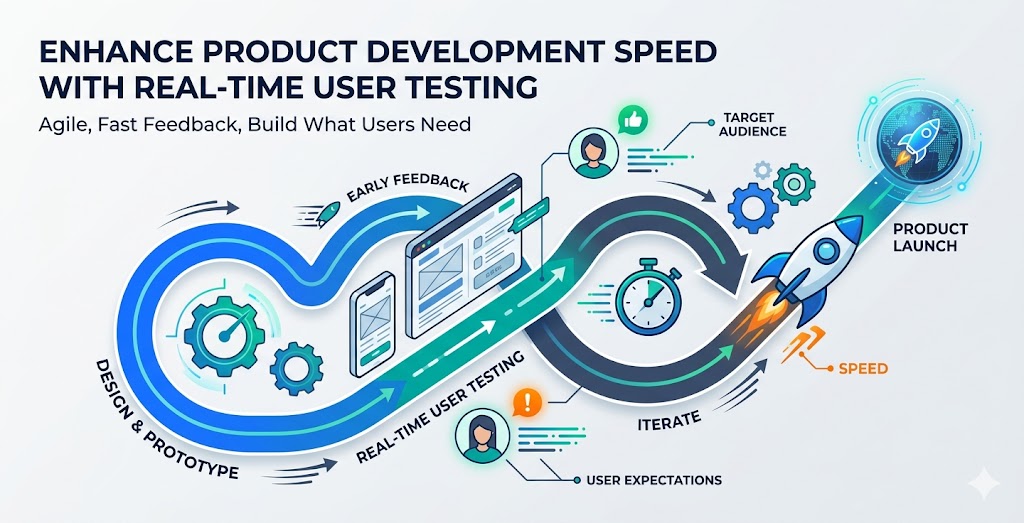
Speed is vital in software development, so developers like to use real-time user testing to accelerate product creation. While using the product, developers can get feedback directly from users and thus gain immediate feedback on their design and product functionality. Real-time product testing differs from traditional methods of usability testing, where problems are identified late in the design process, causing delays during the transfer of a prototype into a finished product.
The Challenges of Traditional Product Testing
Before testing new products, traditional testing often required the creation of prototypes or beta versions for the purpose of testing only on a small number of users over a specified period, which caused significant delays, such as:
- Delayed Feedback: Feedback was provided after the development of the product, meaning problems weren’t identified until later in the process, and thus adjustments became costly right before the product was released to market.
- Inefficient Prototyping: Taking longer than expected for prototyping delays the entire development of the product. The more often you iterate on a product during development, the more feedback that you receive from prototypes, and the longer time you take to release your finished product.
- Longer Time-to-Market: Delays in time-to-market will cause the same impact as delays in prototyping time and feedback. This will result in missing out on sales opportunities and having post-launch issues, also causing reputation damage.
How Real-Time User Testing Improves Product Development Speed?
Today, finding rapid ways to fix bugs in new products and keep improving them quickly is very important. Using real-time user testing is an effective way to improve the reliability and speed at which new products are made available.
Here are five proven methods of how conducting user testing for product development can add to the value of the final product.
- Faster Feedback Loops
The benefits of real-time user testing allow developers to get an instant view of the user’s experience and how successful the product is performing. Therefore, developers do not have to wait until the product launches to receive any post-launch feedback or perform any quick fixes along the way.
For example, when a user struggles with a mobile app, the developer can fix the issue before launching the app, thus decreasing the delays.
- Early Issue Identification
In traditional testing cycles, issues often go undetected until much too late, resulting in wasted time and high expenses. Real-time software testing can help identify numerous types of problems during the early stages of development, including usability issues or misunderstandings about specific features, etc.
Therefore, once the team can identify and correct as many issues as possible before the end of the development step, there won’t be large amounts of rework at the end of the project cycle, which would otherwise cause the project timeline to be missed.
- Continuous Iteration for Faster Releases
User testing in agile product development speeds up iterative cycles of development throughout the entire development lifecycle. Since user testing consistently provides ongoing, immediate feedback, developers can make proposed changes to new features before they are fully developed.
Organizations using agile methods that obtain timely feedback will have the ability to modify and improve their software in shorter time frames while also producing high-quality products for their customers in each release cycle. Continuous process improvement helps organizations to speed up their overall development times.
- Enhancing Team Collaboration
Real-time testing allows different groups (including product management, marketing, and customer support) to work together as they can visually see how users interact with products and help teams combine their resources into making faster decisions and executing them.
- Optimizing User Experience for Efficiency
Real-time testing lets teams solve users’ problems immediately. Developers can adjust the user interface as bugs arise to enhance both user experiences and reduce fixes needed after the product has launched.
Best Practices for Integrating Real-Time User Testing in Product Development
Adding a real-time user testing aspect to your process will enhance the productivity of your product development. Below are strategies to start doing so.
- Use the Right Tools
You can use a variety of product testing tools for your users in real-time, many of which have very different functionalities and built-in capabilities. The four most popular tools are UserTesting, Hotjar, Crazy Egg, and Lookback.io.
All sites mentioned can serve dual purposes: testing usability of your product and tracking user activity, in addition to providing you with real-time user feedback regarding the way they interact with your product. This information will allow you to make informed decisions based on the data you collect.
- Set Clear Testing Goals
To achieve success with real-time testing in UX/UI design, it’s important to have specific objectives for each test session. Some examples include testing the navigation of the website, the way users register with the site, and how well the site works when accessed through mobile devices. Focus on one element or function at a time so you can gather quality feedback for that particular subject.
- Involve Real Users from Your Target Audience
When testing in real-time, the best results can be achieved by conducting the testing with people who are actually representative of the intended end-users. By doing so, you will get feedback that is valid for your target customers or your end-users.
- Combine Testing with Agile Methodology
Combining real-time testing of users and the use of agile software development methodologies produces positive results in testing of user feedback. Agile allows for frequent testing and continuous iterations into development sprints, which enables products to quickly adapt to feedback and implement changes faster.
Final Thoughts
Using real-time user testing to test, receive feedback, and make changes to your ideas can eliminate the need for extensive testing after developing and launching a product; therefore, you will be able to bring products to market more quickly.
Adopting a real-time user testing approach is critical for companies wanting to accelerate their product development timelines. Whether you are developing software, a website, or a mobile application, real-time user feedback will enable you to create products that satisfy users, enhance the overall user experience, and reduce time to market.

- How Real-Time User Testing Improves Product Development Speed - May 4, 2026
- Data-Driven UX: Using AI to Scale Customer Journey Mapping - March 31, 2026
 Give feedback about this article
Were sorry to hear about that, give us a chance to improve.
Error: Contact form not found.