Initial impressions are formed in an instant. According to studies, it takes only 50 milliseconds for a visitor to create an impression about a website, and for the majority of people, this little period of opinion shapes their perception of the entire firm. This emphasizes an underlying fact: acquiring users is only the first stage. The real matter of concern is to involve them, lead them simply through the user journey, and transform interactions into valuable results.
In this blog, we’ll explore key elements of UI/UX Design, its impact and strategic considerations necessary to transform user interactions into measurable business growth.
Defining UI/UX Design: A Technical Perspective
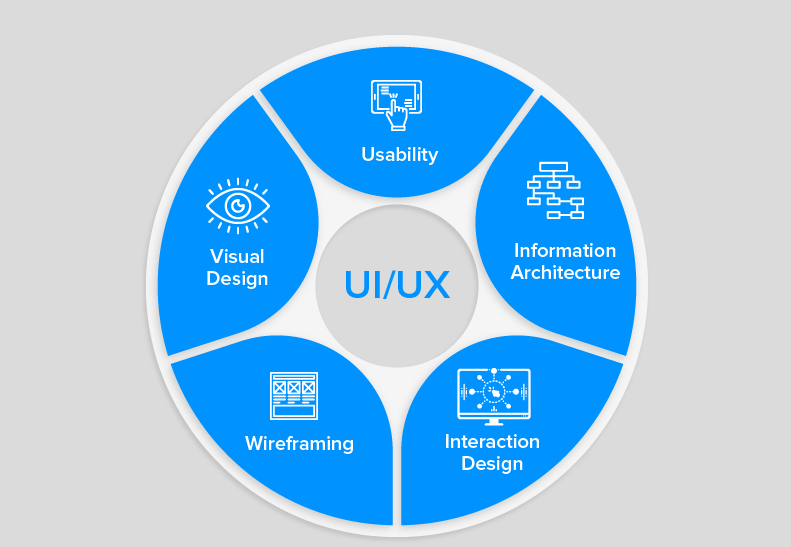
User Interface design refers to the systematic creation of interactive digital components that facilitate efficient user-system interaction. This comprises visual hierarchy, layout grids, typography, color theory, and micro-interactions that direct user attention and improve job completion. On the other hand, User Experience design is the strategic discipline of arranging and maximizing the whole user-product interaction. UX includes usability engineering, cognitive load reduction, accessibility compliance, information architecture, and interaction design to provide easy navigation, simple procedures, and high user satisfaction.
Every successful digital product is based on the principles of user interface and user experience. Whereas UI ensures the product is visually attractive and professional, UX can guarantee the product functions correctly and provides an engaging and intuitive experience. In other words, the appearance and experience of a product are done by UI, and the working and sensations are guided by UX. The collaboration of the two results in a data-based design ecosystem that enhances quantifiable brand growth.
The Strategic Importance of UI/UX Design for Business Growth
Design plays a much bigger role than just making things look good. It has an impact on user engagement, conversion rates, customer retention, and brand reputation. An interface that is designed well keeps people interested and gives them confidence, whereas an inconsistent interface will drive them away. Each tap, swipe, and scroll has the potential to either enhance or erode a relationship between a company and its consumers.
Users tend to contribute to the digital experience longer when it feels natural. Think of a banking app with clear layouts, accessible buttons, and quick feedback. Easy completion of transactions by the users creates a sense of trust and satisfaction. On the same note, a well-structured site with clear navigation and quick response rates will promote more interaction. These experiences represent the notion of professionalism and reliability, which results in customer loyalty.
Conversion is the next step in this design-driven journey. Each and every decision that a user makes, be it sign up, subscription, or purchase, is influenced by the ease of use and lack of friction of the interface. A single unclear form or a button placed incorrectly can break off a user’s momentum. Simple changes like shorter forms, clearer buttons, and consistent visuals can make it easier for people to move forward. When users feel at ease, they act without hesitation.
Trust and retention form the long-term benefits of effective UI/UX design for business growth. A brand becomes familiar and reliable when consumers begin to identify it by its colors, tone, and layout. Because they know what to anticipate, they return. However, that trust is rapidly betrayed when a website feels sluggish or unintuitive. Infact, 88 percent of users are less likely to return after a bad experience, according to research.
The best thing is that the design is constantly evolving. Businesses can discover what is effective and what requires improvement by observing user behavior, clicks, and pauses. Every update becomes an opportunity to improve the experience with these insights. With time, design becomes a truly competitive advantage that maintains user loyalty, satisfaction, and engagement.
Key Elements of Effective UI/UX Design
UI/UX design is the link between a user’s requirements and a product’s functionality. Companies focusing on the following features of UI/UX design services develop experiences that increase engagement, conversions, and loyalty. The most effective elements are:
User-Centered Design
Everything begins with understanding users. Through research, interviews, and usability tests, designers uncover real motivations and pain points. This insight forms the foundation for every design decision. A user centered approach means that the features are a solution to real needs, and thus, guesswork is minimized and satisfaction is enhanced. Users are also more inclined to interact when they feel that they have been heard.
Clear and Intuitive Navigation
Smooth navigation ensures that users can move easily through digital interfaces without confusion. Logical menus, breadcrumbs, and simple page hierarchies make it easy for users to find what they need. Navigation that feels intuitive reduces frustration and speeds up task completion. Clarity in structure leads directly to clarity in experience and that’s what drives trust and conversion.
Visual Consistency and Hierarchy
The first impression is made by the visual design. The use of consistency in typography, color schemes, space, and icons throughout the screens brings familiarity. The visual hierarchy have a distinct hierarchy of what should be given attention by the user, be it a call to action or an important element of information. Irregular images, however, cause confusion and decrease trust. Consistency not only improves usability but also strengthens brand recognition.
Accessibility and Inclusion
The main focus of universal design is that the digital world is open to everybody, including persons with disabilities who might find it difficult to use various products and services. The global acceptance of standards like WCAG (Web Content Accessibility Guidelines) along with the ADA compliance with accessibility features not only makes the interface inclusive but also safe from the legal aspect. Features like high contrast ratios, text alternatives for images, keyboard navigation, and scalable text sizes improve usability for all. Accessibility expands reach and shows a brand’s commitment to social responsibility.
Performance, Feedback, and Responsiveness
Performance directly affects perception. The flow of interaction can be interrupted by slow loading pages or lagging animation. Image compression, lazy loading, and efficient coding can be used as optimization techniques to ensure responsiveness across devices. In the meantime, the feedback, such as progress bars, hover effects, or form validations, gives the user a sense of security and directs them through the process of the sequential steps. These micro-interactions make systems feel alive and responsive, fostering a sense of control and satisfaction. These iterative upgrades based on real user behavior guarantee that UI/UX strategy investments produce measurable commercial results.
Continuous Improvement through Data
Design is never complete; it is a process that evolves with the user action and change in the market. On-going analysis of the data assists in detecting gaps in the usability and putting new solutions to test. The designers can identify what is working and what is not with the help of metrics like click paths, dwell time and drop off points. Continuous improvement fills the gap between the expectations of the user and business performance.
Emotional and Cognitive Considerations
Effective UX design is based on a profound knowledge of human psychology, emotional stimulation, and thoughtful behavior. Designers should consider the way the users think, feel, and make decisions during their online journey. Cognitive overload and decision fatigue can be decreased by simplifying the choices, applying common design patterns, and creating reassuring messages.
Considerations and Challenges in UI/UX Design
The most advanced design strategies undergo obstacles which have the potential to affect business performance. Understanding these UI/UX mistakes and considerations is crucial for effective implementation.
Balancing Innovation and Usability
Design flourishes on innovation, but innovation must have a purpose. The introduction of new layouts, gestures or features is enough to catch attention. However, when users cannot learn how to use them, their engagement diminishes. The trick is to mix creativity and familiarity so that the experiences should always be fresh yet with intuitive navigation and recognizable interaction.
Managing Constraints and Prioritizing Efforts
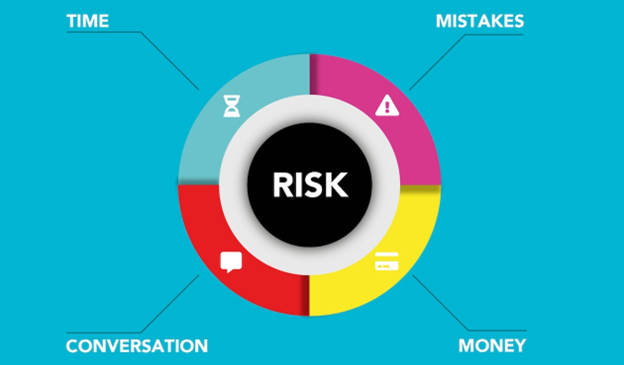
Design excellence takes time, testing, and adjustments, but not every project has endless resources. Tight schedules or limited budgets often force trade-offs. Instead of cutting corners, successful teams focus on what’s most important: key user journeys and features that make a big difference. Using design systems for reusable parts, quick methods can speed up production without losing quality. Prototyping early and validating ideas through user testing saves time in the long run. This smart approach makes sure that even with limits, design choices stay meaningful and match what users expect.
Adapting to Evolving Standards and Technology
The environment in which UI/UX design operates is ever changing. Rapid changes occur in accessibility standards, device capabilities, and interaction patterns. This means designers need to keep learning and looking into new things. To make sure everyone, including those with disabilities, can use their products, designers follow guidelines like WCAG 2.2. Similarly, products can maintain their competitiveness in the market by making the most of emerging technologies like voice interfaces, AR/VR, and gesture-based navigation. Organizations that see learning as an on-going process are agile and future ready, with the positioning of the products to perform well over time.
Measuring the Real Impact of Design
Perhaps the most persistent challenge in UX design is proving its business value. Even though a good design seems intuitive, its effects are not always visible unless they are associated with objective metrics. The KPIs used in calculating conversion rates, retention, length of engagement, and Net Promoter Score (NPS) are a tangible source of evidence of design effectiveness. The integration of qualitative understanding and quantitative analytics assists teams to comprehend not only what the users are doing, but the reasons behind their actions. Putting the results of user experience into the metrics of the business, organizations can invest in design continuously and make UX a quantifiable growth driver.
Conclusion
UI/UX design has evolved from a visual discipline to a strategic function that directly shapes business outcomes. The real strength of design comes from knowing what users want and turning that into experiences that are smooth and easy to use. By uncovering how people truly interact with digital products, it enables evidence-based design decisions that enhance usability, performance, and trust.
Your Growth Starts with Better Design! Get in touch and let our experts optimize your UI/UX strategy.

- How Purposeful UI/UX Design Creates Value and Business Growth - November 17, 2025
 Give feedback about this article
Were sorry to hear about that, give us a chance to improve.
Error: Contact form not found.