Global onboarding often breaks quietly.
A new hire gets access to six platforms, three shared folders, a welcome deck, a chat channel, and a calendar packed with intro calls. Everyone has done their part. HR sent the documents. IT opened the accounts. The manager built a checklist.
Still, the employee isn’t sure what to do first.
A new employee has to move through unfamiliar systems, language, relationships, workflows, and expectations. For someone joining from another country or time zone, even small gaps can feel larger. A vague first task. A policy written for the home market. A training module that explains the tool but not the way the team actually uses it.
The same thinking behind onboarding UX applies inside the company too, because every unclear handoff adds friction before the employee can do useful work.
Adding another platform rarely fixes that. The journey itself needs work.
Onboarding Starts Before the First Login
The employee journey begins before someone opens a company laptop.
For global hires, early friction often starts with paperwork, contracts, payroll setup, benefits, tax details, local employment rules, and access planning. If those pieces feel scattered, day one already carries doubt. The employee may not see every operational step, but they feel the effect when something is late, unclear, or handled differently from what they expected.
That early layer is especially messy when a company is hiring in a country where it doesn’t already have a local entity. An employer of record (EOR) can become part of the operating model because it helps handle local employment requirements while the company focuses on the actual employee experience.
A cleaner employment setup gives the onboarding journey a steadier starting point before managers, trainers, and internal systems take over.
The first week shouldn’t be spent chasing basics. A new hire should know who they report to, what happens next, where key information lives, and which tasks matter first. The smoother the start, the easier the rest of the journey becomes.
More Platforms Can Make the Path Messier
A growing company often adds platforms to solve onboarding gaps.
One system stores HR documents. Another handles training. A knowledge base stores policies. A project tool lists tasks. A chat app carries questions. A video library stores walkthroughs.
Each one may have a sensible purpose. The problem appears between them.
The employee has to work out which system matters for which task. Managers assume instructions are obvious because they already know the company. HR assumes the checklist is clear because all the items are listed. IT assumes access is complete because the accounts exist.
From the new hire’s point of view, the path may still feel fragmented.
UX thinking changes the question. Instead of asking whether every onboarding platform exists, ask whether the employee can move through the journey without confusion. Can they find their first task? Do they know what “done” looks like? Can they tell which information is required and which is background reading? Do they know where to ask for help?
A large stack can still leave people guessing.
Test Onboarding Like a Product Experience
Companies test websites, apps, signup flows, and product demos because small points of friction can change behavior.
Onboarding deserves the same treatment.
A simple usability test can reveal where new hires get stuck. Ask a recent employee to complete a typical first week task. Ask them to find a policy, locate a customer story, complete a training module, submit a question, or explain the next step in their role path. Watch where they pause.
The point isn’t to catch people out. It’s to find the weak spots in the journey.
Maybe the training module is easy to complete but hard to apply. Maybe the knowledge base uses internal language that only people who have worked there for years understand. Maybe the checklist lists too many tasks without showing priority. Maybe the first project brief assumes context the employee hasn’t learned yet.
Those are design problems as much as management problems.
Build Learning Around Roles
Global onboarding needs structure, but every employee shouldn’t be pushed through the same path.
A customer support hire, a product marketer, and a software engineer need different learning journeys. They may share company basics, security expectations, product context, and communication norms. After that, the path should become more specific.
Support may need product workflows, escalation rules, tone guidance, and ticket examples. Sales may need buyer personas, objection handling, pricing logic, and demo practice. Engineering may need architecture notes, release processes, coding standards, and incident procedures.
For teams managing those paths across locations, an onboarding LMS keeps modules, reminders, completion records, and certificates in one place instead of spreading the journey across folders, spreadsheets, and manager memory.
The manager benefits too. They can see where the employee is in the journey, what’s been completed, and where a real conversation may be needed.
Local Context Should Be Part of the Flow
Global teams can’t assume every hire experiences the company in the same way.
A remote employee in one country may be starting during the manager’s evening. Another may be joining from a market where customer expectations, work norms, or legal requirements differ from the company’s home base. A third may understand the product but not the internal decision style.
The shared onboarding path should explain the company clearly. The local layer should explain what changes by region, team, or role.
That may include working hours, communication norms, customer examples, sales objections, escalation paths, regional compliance notes, or support expectations. Without this layer, employees are left to pick up context informally, often through repeated questions in chat.
Good onboarding doesn’t make the global employee decode the company alone.
Managers Need Better Journey Signals
Managers often see onboarding through meetings and checklists.
The employee attended orientation. The training modules are marked complete. The first one to one happened. Access was granted. On paper, things look fine.
But completion doesn’t always mean confidence.
A new hire may finish every required task and still feel unsure about the product, the customer, or the team’s decision rules. They may understand the company values but not how those values show up in daily tradeoffs. They may know where the knowledge base is but not which pages matter most.
Better onboarding gives managers signals beyond completion. Short practical tasks, first project reviews, product walkthroughs, manager prompts, and learner feedback can show whether the employee is ready to use what they learned.
The better question isn’t “Did they complete onboarding?” It’s “Can they now do the work with less guesswork?”
Improve the Journey Every Time Someone Joins
Onboarding should get sharper with each new hire.
Repeated questions are data. Confusing steps are data. Missed handoffs are data. If every new employee asks where customer examples live, the journey is telling the company something. If people complete training but still need live explanations, the content may not be practical enough. If remote hires struggle more than office hires, the process may depend too much on informal support.
Global teams should review the onboarding journey regularly, not only when something goes badly.
That review should include HR, managers, IT, training owners, and recent hires. Each group sees a different part of the experience. Together, they can spot where the journey feels smooth from the company side but confusing from the employee side.
Better Journeys Beat Bigger Stacks
Before buying another platform, global teams need a clearer view of the path employees are being asked to follow.
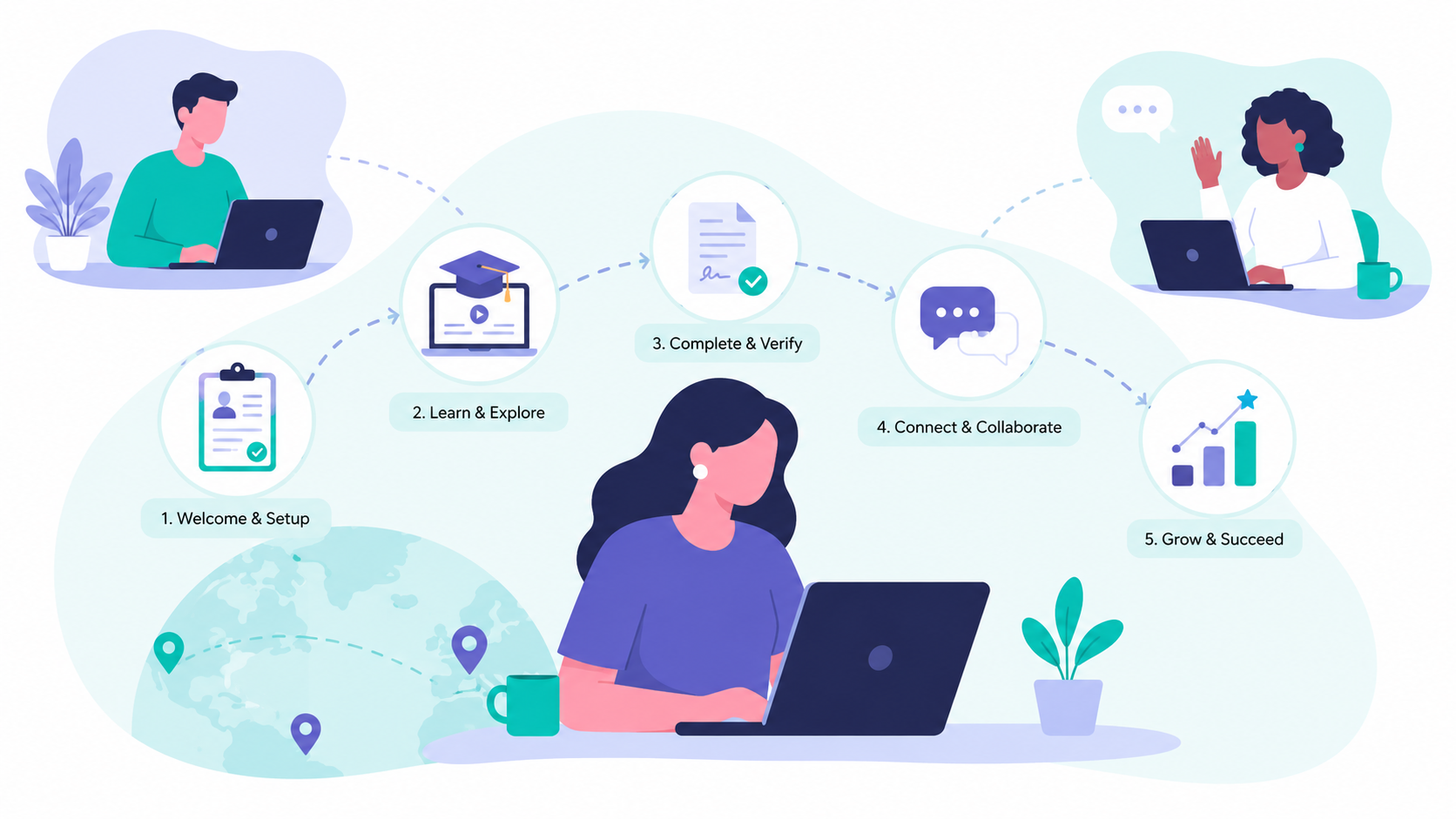
A strong onboarding experience helps employees know where to start, what to learn, who to ask, what good work looks like, and how their role connects to the company. It also gives managers and training teams a clearer view of where people are progressing and where they are stuck.
For distributed teams, that clarity matters more than ever. The office no longer fills in the gaps. Casual shadowing is harder. Time zones slow small questions. Local context can disappear unless someone designs for it.
The strongest onboarding journey feels simple from the employee side because the difficult work has already been done behind the scenes.
The path is clear. The next step makes sense. The employee can move forward without guessing.

- 7 Tools UX Teams Can Use to Find Where Conversion Journeys Break - September 1, 2026
- How UX Research Helps Companies Enter New Markets With Less Risk - July 27, 2026
- Why Global Teams Need Better Onboarding Journeys, Not Just More Tools - July 13, 2026
 Give feedback about this article
Were sorry to hear about that, give us a chance to improve.
Error: Contact form not found.