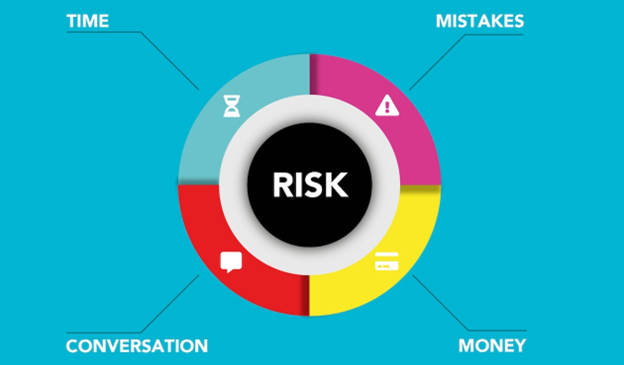
Agile promises speed. UX research demands validation. When these priorities collide, most product teams choose speed.
The result is predictable: features ship on schedule, but usability issues surface later, requiring rework that quietly erodes sprint gains.
Research from Nielsen Norman Group has shown that fixing usability issues after development can cost up to 10–100 times more than addressing them during early design. Multiple industry analyses on rework economics echo the same pattern: the later a usability flaw is discovered, the more expensive it becomes.
Velocity without validation is not efficient. It is deferred waste.
The problem is not Agile. The problem is how teams structure the relationship between discovery and delivery.
This article introduces a practical integration model, Evidence-First Sprinting, that embeds UX research directly into Agile cycles and the broader product design process without slowing development throughput.
The Structural Tension: Delivery Velocity vs Discovery Latency
Most Agile teams operate on delivery velocity: how quickly working increments are shipped.
UX research operates on discovery latency: the time required to observe, analyze, and interpret user behavior.
When discovery latency exceeds sprint cadence, research findings arrive too late to influence implementation. When it is compressed without structure, research becomes shallow.
If research arrives after sprint planning, you are not practicing user-centered Agile. You are practicing assumption-driven development.
The integration challenge is therefore structural, not philosophical.
Introducing the One-Sprint Validation Buffer Model
The core of Evidence-First Sprinting is simple:
Maintain a one-sprint validation buffer between research and development.
This means:
- Discovery activities run one sprint ahead.
- Delivery sprints implement validated insights.
- UX findings feed backlog refinement before sprint commitment.
How It Works in Practice
Sprint N (Discovery Buffer)
- Conduct user testing and structured prototype testing on interactive designs.
- Analyze usability metrics.
- Identify friction clusters.
- Translate findings into backlog-ready items.
Sprint N+1 (Delivery)
- Implement validated design adjustments.
- Run QA and regression testing.
- Prepare for A/B or release validation.
This structure preserves sprint velocity while eliminating guesswork.
Instead of building first and testing later, teams validate first and build with evidence, guided by proven user-based testing principles that prioritize real user behavior over stakeholder assumptions.
Translating Research Into Sprint-Ready Work
A common failure point is documentation without operational translation.
UX research cannot live in slide decks.
It must convert into:
- User stories
- Acceptance criteria
- Measurable UX targets
- Embedded evidence
A practical transformation model looks like this:
Observed Friction
Users hesitate for 8–12 seconds before selecting a navigation item.
This hesitation often signals deeper information architecture issues rather than superficial UI flaws.
Sprint-Ready User Story
“As a returning user, I need a clearer navigation hierarchy so I can access dashboard tools without hesitation.”
Improved hierarchy strengthens overall website findability and reduces cognitive load.
Acceptance Criteria
- Reduce time-to-first-click by X threshold.
- Increase task success rate to defined benchmark.
- Decrease navigation error frequency.
Evidence Attachment
- Session replay timestamp.
- Clickstream visualization.
- Heatmap clustering.
When research evidence sits directly inside the backlog tool, it influences sprint planning organically.
Why A/B Testing Is Not a Marketing Activity
Many product teams isolate A/B testing within marketing workflows. This is a structural mistake.
A/B testing is product validation.
In Evidence-First Sprinting:
- UX research identifies a friction hypothesis.
- Design produces validated prototypes.
- Development implements variation.
- A/B testing measures behavioral impact.
- Benchmarking tracks sustained performance.
For example, when comparing two onboarding flows, teams should measure:
- Task completion rate
- Time-on-task
- Drop-off rate
- Post-task satisfaction score
Without controlled validation, Agile teams rely on stakeholder opinion. With A/B integration, iteration becomes measurable.
Rework Economics: The Cost of Delayed Validation
Multiple industry analyses show that late-stage corrections disproportionately inflate costs.
The cost multiplier effect can be simplified:
Rework Cost Multiplier = Validation Delay × Implementation Scope
When validation delay increases, implementation scope typically increases as well. A flaw discovered post-release affects live users, requires patch deployment, and may introduce technical debt.
By contrast, flaws discovered during prototype testing affect only design artifacts.
This is not about slowing sprints. It is about reducing compounding inefficiency.
A Realistic Implementation Scenario
Consider a SaaS platform redesigning its analytics dashboard.
Initial internal review approved the layout. The delivery sprint began.
Instead of proceeding blindly, the team introduced a one-sprint validation buffer:
- Conducted remote moderated user testing on an interactive prototype.
- Identified confusion around filter hierarchy.
- Observed repeated misclick patterns in session recordings.
- Synthesized findings within three days.
The validated redesign entered the next sprint backlog.
Over subsequent release cycles, the team observed:
- Reduced support tickets related to navigation.
- Faster task completion during usability benchmarking comparisons against previous sprint baselines.
- Stable sprint velocity despite the additional research step.
The improvement was not dramatic overnight transformation. It was a reduction of preventable friction.
That is the practical value of integration.
Embedding UX Metrics into Agile Rituals
Agile teams routinely review:
- Story points completed
- Bug count
- Deployment frequency
Few review usability metrics in retrospectives.
To operationalize Evidence-First Sprinting, teams must add:
- Task completion rate trends
- Time-on-task averages
- Error frequency analysis
- Usability benchmarking comparisons
However, teams must be cautious not to rely on surface-level indicators alone. Even widely used metrics like NPS can be misleading when misapplied.
The Role of AI in Accelerating Discovery
AI-driven usability analysis tools and emerging AI agents can reduce discovery latency by accelerating behavioral analysis and pattern recognition.
AI can:
- Detect friction clusters across sessions.
- Summarize behavioral anomalies.
- Identify unexpected navigation loops.
- Highlight usability regression patterns.
However, AI does not replace structured integration.
AI insights must feed directly into sprint refinement workflows. Without operational embedding, AI becomes observational rather than transformative.
The advantage of AI in Agile environments is speed alignment. Faster synthesis reduces discovery latency without sacrificing rigor.
Common Integration Failures
Even mature teams struggle with:
UX as Phase Instead of Process
If research stops after initial discovery, integration collapses.
Mobile Testing as Afterthought
Mobile usability frequently diverges from desktop patterns, making dedicated mobile testing essential within sprint cycles.
Quantitative Without Qualitative Context
A/B testing shows a difference, but user testing explains why.
Undefined UX Success Thresholds
Without clear usability targets, iteration becomes subjective.
Evidence-First Sprinting Checklist
To integrate UX research into Agile product development:
- Maintain a one-sprint validation buffer.
- Translate research into measurable backlog items.
- Attach evidence directly to user stories.
- Integrate A/B testing into release validation.
- Review usability benchmarks quarterly.
- Include UX metrics in sprint retrospectives.
When these practices become systemic, UX stops competing with Agile velocity.
It supports it.
The Strategic Advantage
Teams that integrate UX research into Agile cycles do not ship slower.
They ship smarter.
They reduce:
- Rework cycles
- Post-release friction
- Assumption-driven iteration
- Cross-functional misalignment
Agile without UX validation is iterative guessing.
Agile with embedded UX research is structured adaptation.
Final Thoughts
Integrating UX research into Agile product development is not about adding ceremony. It is about restructuring flow.
When discovery runs one sprint ahead, when research translates directly into backlog evidence, when A/B testing validates iteration, and when usability benchmarks sit beside velocity metrics, Agile becomes evidence-driven.
Speed is only valuable when it moves in the right direction.
Evidence-First Sprinting ensures that it does.

Scoop Labs
- How to Add UX Research to Agile Sprints Without Slowing Your Team Down - April 14, 2026
- Why Dark Mode Isn’t Always the Best Choice: A UX Perspective - December 15, 2025
 Give feedback about this article
Were sorry to hear about that, give us a chance to improve.
Error: Contact form not found.